UK and China signal reset in economic relations, beginning with visa-free travel
The United Kingdom and China are seeking to reframe their economic relationship around stability, long-term planning and practical cooperation, marking a shift away from the more politically charged “Golden Era” promoted a decade ago. UK Business and Trade Secretary Peter Kyle said the relationship has entered a more grounded phase, focused on aligning strategic priorities and encouraging mutual investment.
Speaking in Shanghai on 30 January during Prime Minister Sir Keir Starmer’s official visit to China, Kyle described the current approach as one based on realism and predictability. He said both governments are now taking a broader view of their respective economic strategies, creating space for more constructive engagement. According to Kyle, this pragmatic framework offers a firmer foundation for collaboration than has existed in recent years.
Starmer’s visit, the first by a British prime minister in eight years, underscored the government’s intent to rebuild senior-level dialogue. He arrived in Beijing on 28 January for a four-day programme, accompanied by representatives from more than 60 British companies and institutions spanning pharmaceuticals, culture, clean energy and advanced manufacturing. The delegation included AstraZeneca and the National Theatre, highlighting the breadth of sectors targeted for renewed cooperation.
Kyle pointed to similarities between the UK’s 10-year industrial strategy and China’s current five-year economic plan, arguing that overlapping priorities create opportunities for joint investment. Areas such as life sciences, climate technology and artificial intelligence were identified as sectors where both countries have strong capabilities and global influence.
During the Shanghai leg of the visit, the UK delegation met with Envision Group, a Chinese renewable energy company developing a large-scale energy storage facility in northeast England. The group also visited the Design Innovation Institute Shanghai, reflecting a focus on research-led collaboration and green transition initiatives.
AstraZeneca used the visit to confirm plans to invest USD 15 billion in China over the next five years, expanding its manufacturing, research and development operations. UK officials said the announcement demonstrates the continued importance of China to British companies operating globally, while also reinforcing Britain’s desire to attract inward investment from Chinese firms.
Kyle emphasised that partnerships supporting sustainability and clean growth could deliver tangible benefits for the UK economy, including job creation and export growth. He added that collaboration with Chinese companies could accelerate progress in fast-growing global markets.
Alongside trade and investment, the two governments have also taken steps to ease travel between the countries. The UK government confirmed on 1 February that British passport holders are now eligible for visa-free entry to China for stays of up to 30 days. The policy, agreed during Starmer’s visit, takes effect immediately and represents the first such concession for UK citizens in more than 20 years.
Officials described the move as a confidence-building measure aimed at stimulating business travel, tourism and educational links. The scheme applies to visits for tourism, business meetings, family travel or transit, although longer stays and employment still require a visa.
The change is expected to support growing commercial engagement at a time of slower global growth, with UK and Chinese officials signalling that stability and openness will underpin the next phase of bilateral relations.
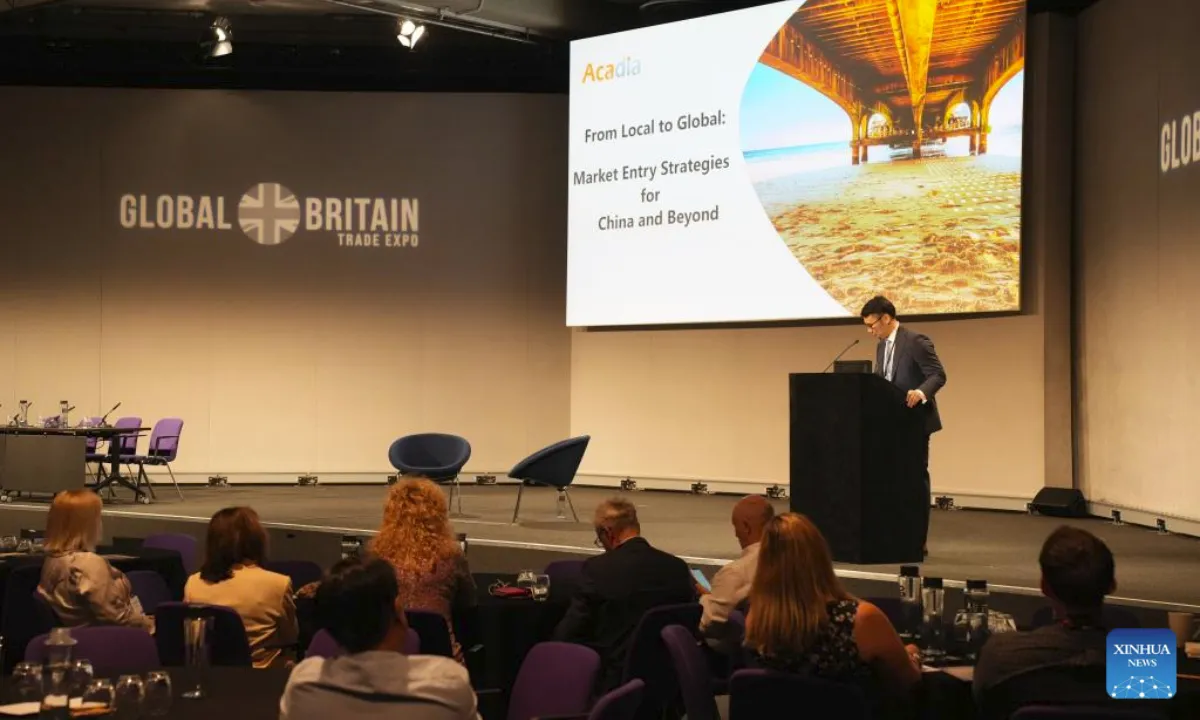
To find out more about opportunities for British businesses with China attend Global Britain Trade Expo 2026, 11th June 2026 at London’s QEII Centre. To purchase tickets click here.